Heal Damaged Nails Naturally After Acrylics
Key Features
- Step-by-step guide to reversing nail damage from artificial enhancements
- Proven natural remedies using everyday ingredients
- Essential tips for long-term nail strengthening and protection
- Realistic timelines and common pitfalls to avoid
Damaged nails are a common aftermath of indulging in the glamour of acrylics, gels, and press-ons. These artificial enhancements, while beautiful, often lead to brittle, thin, and peeling natural nails once removed. If you’ve recently ditched the salon for healthier options, you’re not alone—millions of women face this challenge each year. At Unnail, we specialize in guiding you back to strong, natural nails without harsh chemicals or expensive treatments.
The good news? Your nails can recover with consistent care and natural methods. Nails grow from the matrix under the cuticle, so protecting this area is key to regeneration. Factors like dehydration, trauma from removal, and nutrient deficiencies exacerbate damage, but addressing them holistically can turn things around. This article dives into why your nails suffer, practical home remedies, and proactive strategies for lasting strength.
We’ll cover everything from understanding the science of nail damage to actionable daily routines. Expect to learn how ingredients like olive oil and biotin can nourish from within, plus timelines for seeing results. Whether your nails are ridged, split, or simply weak, these insights empower you to reclaim your natural beauty. Ready to start your recovery journey? Let’s explore how Unnail’s approach can help you achieve resilient, envy-worthy nails that shine on their own.
Understanding Nail Damage from Artificial Enhancements
Artificial nail products like acrylics, gels, and press-ons promise instant perfection, but they come at a cost to your natural nails. Acrylics, made from polymer powders and liquid monomers, create a hard shell that can file down the nail plate during application and removal. Gels, cured under UV light, often require soaking in acetone, which strips natural oils and leads to dryness. Press-ons, while less invasive, still apply pressure and adhesives that weaken the nail bed over time.
The primary issues include thinning of the nail plate, where repeated layering prevents natural growth signals; cuticle damage from pushing back or improper filing; and increased brittleness due to dehydration. According to dermatologists, up to 70% of women who regularly use enhancements report nail fragility afterward. Scientifically, nails are made of keratin, a protein that needs moisture and nutrients to stay flexible. When deprived, they become prone to splitting, peeling, and even infections if bacteria enter through micro-tears.
Signs Your Nails Need Immediate Attention
Look for white spots (leukonychia from trauma), ridges running vertically or horizontally, or nails that bend easily. If your cuticles are inflamed or your nails lift from the bed (onycholysis), it’s a red flag. Ignoring these can prolong recovery, so start by giving your nails a break—no more enhancements for at least 3-6 months.
To better grasp your specific damage, visit Unnail for personalized advice tailored to your nail history. Understanding this foundation sets the stage for effective healing, preventing further harm and promoting regrowth from the root.
Natural Remedies and Home Care Routines
Healing damaged nails starts with gentle, natural remedies that replenish lost moisture and nutrients. Forget pricey salon fixes; your kitchen holds powerful allies. A daily routine focused on hydration and protection can make a world of difference.
Actionable Tip 1: Daily Oil Soaks for Hydration
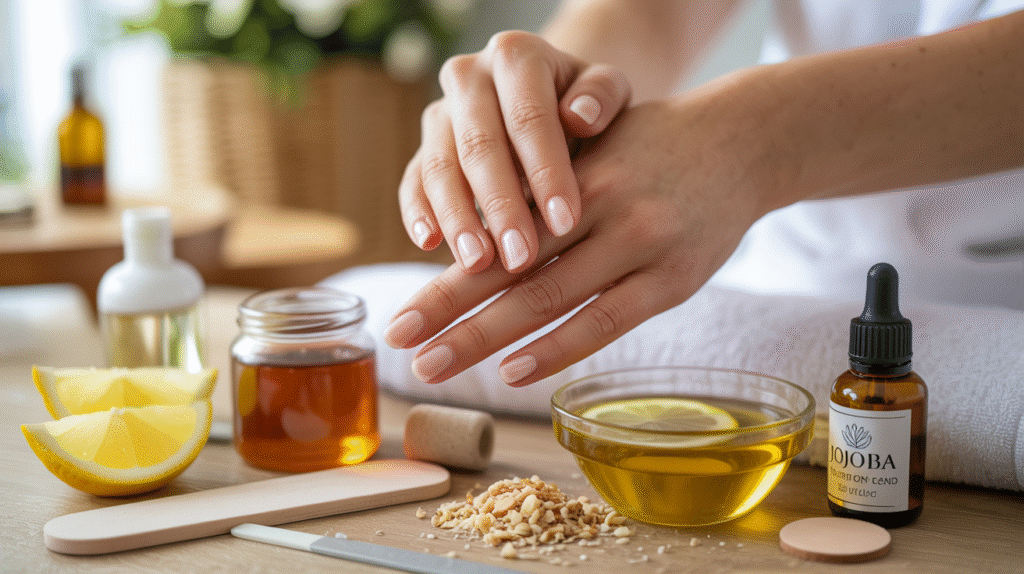
Mix equal parts olive oil and lemon juice in a small bowl. Soak your nails for 10-15 minutes nightly. Olive oil penetrates the nail plate to restore flexibility, while lemon’s vitamin C brightens and strengthens. Pat dry gently and apply a moisturizer. This simple ritual combats the dryness from acetone exposure, with many seeing smoother nails in just two weeks.
Actionable Tip 2: Honey and Almond Mask for Nourishment
Combine one tablespoon of raw honey with ground almonds to form a paste. Apply to clean nails and cuticles, leave on for 20 minutes, then rinse. Honey’s antibacterial properties soothe irritated skin, and almonds provide vitamin E for repair. Use twice weekly to encourage keratin production and reduce peeling.
Actionable Tip 3: Gentle Filing and Buffing Technique
Once a week, file nails in one direction with a glass file to avoid splitting. Follow with a soft buff to smooth ridges, but skip if nails are very thin—over-buffing weakens them further. Always finish with cuticle oil to seal in moisture. This maintains shape without stress, allowing healthy growth.
Warning: A common mistake is over-soaking in harsh removers or picking at edges, which invites infections and delays healing. Be patient; forceful removal of remnants can cause permanent ridges. Instead, opt for non-acetone removers if touching up polish, and let professionals handle stubborn glue from press-ons.
For more routines, check out resources at Unnail, where we share science-backed DIYs. Incorporate these into your evenings for consistent results, and track progress with weekly photos to stay motivated.
Strengthening and Protecting Your Nails Long-Term
Beyond immediate remedies, long-term strengthening involves nutrition, protection, and lifestyle tweaks. Nails grow about 3mm per month, so timeline expectations are crucial: minor improvements like reduced brittleness appear in 4-6 weeks, full recovery from severe damage takes 3-6 months as the entire nail renews.
Nutritional Boosts for Internal Strength
Support nail health from within by eating biotin-rich foods like eggs, nuts, and sweet potatoes. Consider a supplement if deficient—biotin aids keratin formation, reducing breakage. Hydrate with at least 8 glasses of water daily, as dehydration shows first in nails. Omega-3s from fish or flaxseeds combat inflammation around cuticles.
Protective Habits to Prevent Re-Damage
Wear gloves for chores to shield from water and chemicals. Apply a strengthening base coat before any polish, choosing non-toxic formulas. Trim nails straight across to prevent snags, and massage cuticles nightly to improve circulation. These habits not only protect but also enhance growth speed.
Timeline note: If you’ve had enhancements for years, expect slower initial progress due to matrix damage, but consistency pays off. Monitor for 1-2 months; if no change, consult a dermatologist for underlying issues like thyroid problems.
Explore protective product recommendations at Unnail to integrate seamlessly into your routine. By combining internal and external care, you’ll build nails resilient enough to skip enhancements altogether.

Conclusion
Recovering from nail damage caused by acrylics, gels, and press-ons is a journey of patience and natural care. By understanding the causes, adopting remedies like oil soaks and honey masks, and committing to strengthening habits, you can restore your nails’ vitality. Remember the tips: hydrate daily, nourish internally, and protect proactively, while avoiding pitfalls like aggressive picking. With realistic timelines—4-6 weeks for noticeable changes and up to 6 months for full renewal—you’ll soon enjoy strong, beautiful natural nails.
Empower your recovery today with Unnail’s expertise. Take a moment to assess your nail health and get tailored advice.